

Coloquio: Quantum Simulation in the presence of errors
- 04-06-2026 14:00 |
- Aula Magna. Pabellon 1

Así como el término Luthier, que designaba originalmente a los fabricantes de laúdes, se extendió luego a las cuerdas frotadas y a otros instrumentos musicales, podemos hablar de una lutheria “generalizada” como la técnica que involucra la generación y el control del sonido por cualquier medio con un fin artístico. En esta charla vamos a presentar de manera informal algunos desarrollos de nuestro grupo en este sentido y en particular el uso de la dinámica no lineal para replicar instrumentos de viento y crear nuevos instrumentos digitales.
El propósito es desarrollar una herramienta accesible para explorar modelos dinámicos mediante la “sonificación” en tiempo real de las ecuaciones y que permita, por ejemplo en el caso de la réplica acústica, que instrumentistas experimentados puedan establecer correspondencias con sonoridades específicas de su práctica instrumental.

Galo Soler Illia (Instituto de Nanosistemas, Escuela de Bio y Nanociencias, UNSAM)
El desarrollo de las nanotecnologías implica crear y manejar una gran variedad de materiales nanoestructurados, cuyas propiedades dependen de su composición, tamaño, forma y superficie. Estos nanomateriales
pueden ser considerados a su vez bloques de construcción de nanosistemas más complejos, que combinan diferentes regiones con propiedades pre-establecidas (ej: conductividad, luminiscencia, catálisis, afinidad (bio)química, etc).
Entre los desarrollos más recientes, está la posibilidad de construir nanosistemas inteligentes que respondan a estímulos externos como la luz, el pH, la composición química, la presión, etc. Estos nanomateriales “inteligentes” pueden ser programados para comportarse de manera autónoma, y tienen un enorme potencial en diagnóstico, terapias, sensado, robótica blanda, interfaz humano-máquina, etc.
Presentaremos diferentes rutas y estrategias basadas en el control de procesos físicos (autoensamblado molecular, confinamiento) y químicos (reactividad controlada y localizada) para diseñar nanosistemas que
puedan responder de una manera espontánea y aparentemente “viviente” a estímulos externos. La idea centrar implica combinar diferentes nanocomponentes en arquitecturas complejas, y establecer reglas y
métodos de comunicación entre ellos. El rol de las interfaces (superficie externa, nanoporos) y del transporte de señales (carga, moléculas, cambios de volumen) entre estas diferentes regiones nos permite controlar los caminos que llevan del estímulo a la respuesta. Ilustraré estos conceptos con ejemplos en las áreas de sensado, catálisis y nanofluídica. Estos son los primeros pasos para dotar de inteligencia a los materiales del futuro, inspirados en la complejidad de los sistemas biológicos.
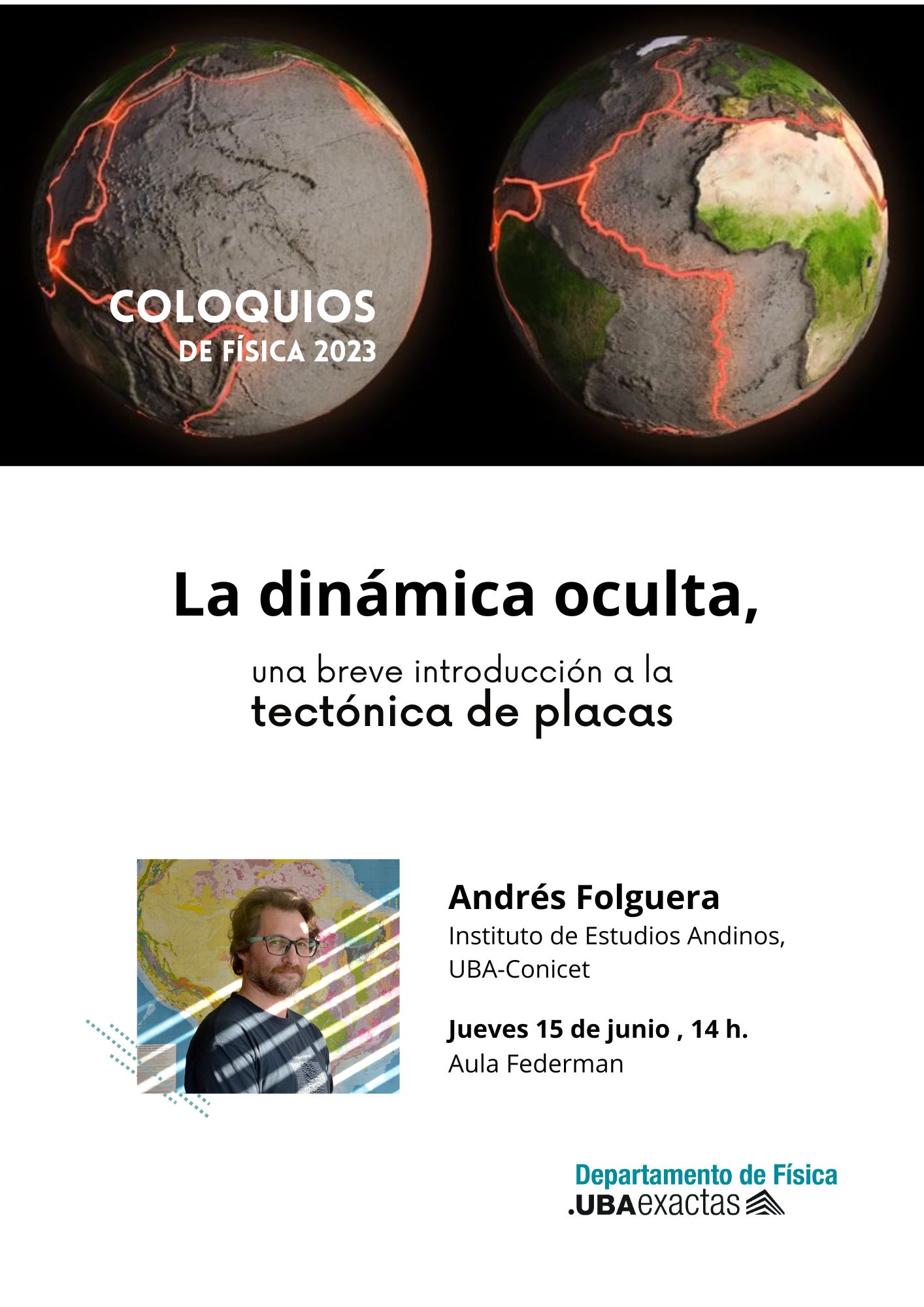
Andrés Folguera
Instituto de Estudios Andinos, UBA-Conicet
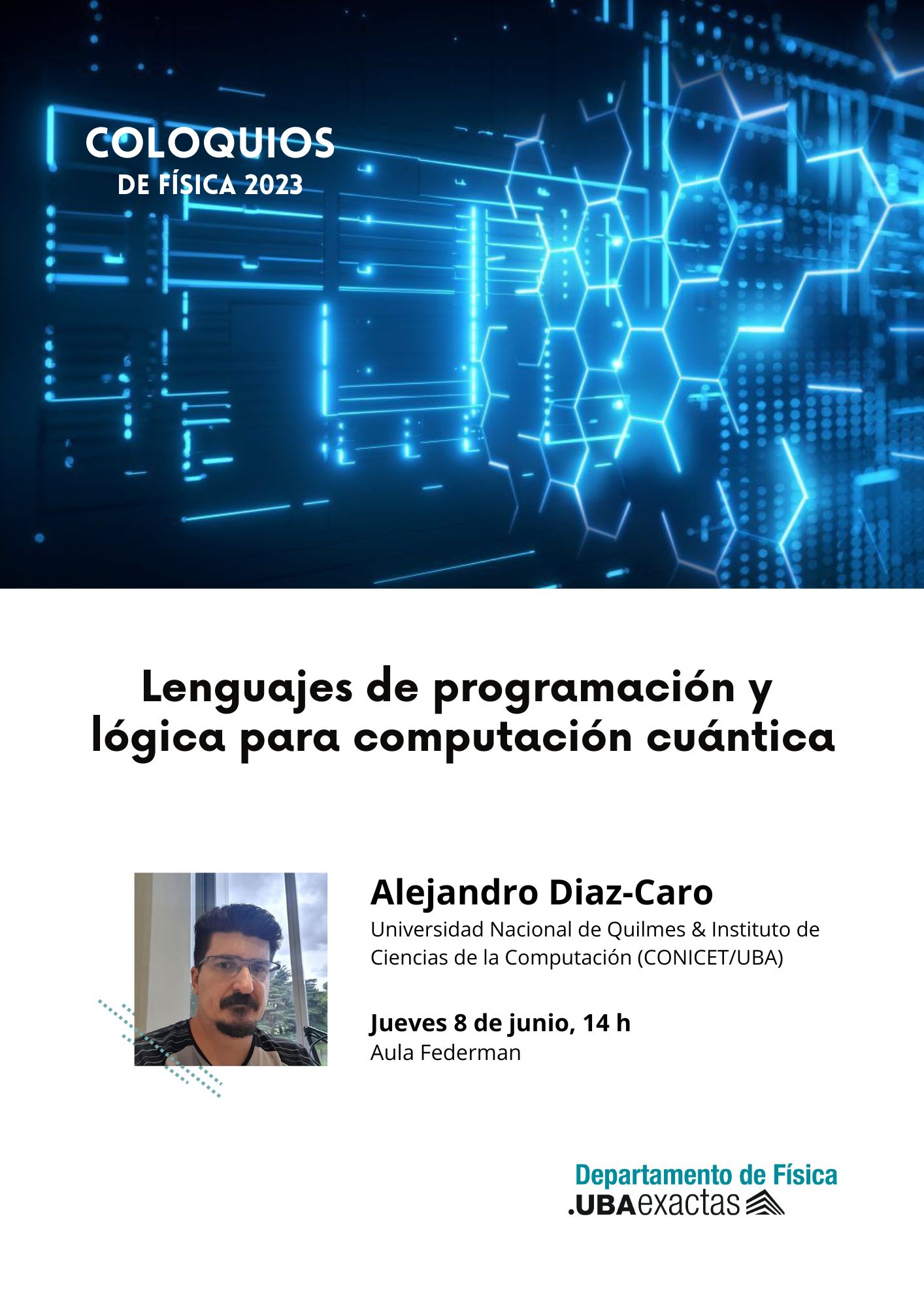
Alejandro Diaz-Caro
Universidad Nacional de Quilmes & Instituto de Ciencias de la Computación (CONICET/UBA)
En ciencias de la computación, es bien conocida la relación entre los lenguajes de programación, la lógica formal y la teoría de categorías en matemáticas. Esta relación se conoce como el isomorfismo de Curry-Howard-Lambek. La idea es que un programa bien tipado es la prueba de una fórmula lógica y es un morfismo en alguna categoría. Para diferentes lógicas, existen diferentes lenguajes de programación y diferentes categorías. Este isomorfismo es responsable de que podamos verificar formalmente la corrección de programas, diseñar lenguajes de programación con características avanzadas guiados por sus modelos y tener asistentes de pruebas matemáticas. En el caso de la computación cuántica, se han definido varios lenguajes de programación. Por un lado, están aquellos en el paradigma de "control clásico", que básicamente son una descripción de un circuito cuántico a alto nivel y permiten componer diferentes circuitos para formar programas más grandes. Por otro lado, están los lenguajes de "control cuántico", en los cuales se abstraen las operaciones cuánticas en primitivas del lenguaje y se consiguen lenguajes con características avanzadas, como permitir la superposición de flujos de control de programas o lenguajes para describir la superposición temporal que puede ocurrir, por ejemplo, en un tablero de óptica cuántica. En esta charla voy a explicar el isomorfismo de Curry-Howard-Lambek y los resultados recientes en el establecimiento de dicho isomorfismo para algunos lenguajes de programación con control cuántico.

Diego Grosz
CNEA - CONICET
En este coloquio abordaremos algunos aspectos de la óptica no lineal, básicamente, qué es y qué aplicaciones importante encuentra. Entre estas últimas, nos concentramos en los sistemas de comunicación por fibra óptica de alta capacidad y en la óptica integrada ("fotónica de silicio").

